By Michael Grider
Your home should feel like a place you love coming back to, but over time, even the most well-designed rooms can start feeling a little flat. You may not have a renovation budget or weeks to spare, but that does not mean that your space has to stay stuck. A targeted weekend project, done well, can shift the entire energy of a room without requiring a contractor, a permit, or a significant financial commitment.
The good news is that some of the most impactful changes you can make to a living space are also the simplest. Swapping out the hardware, adding paint in strategic places, or rethinking how the furniture sits in a room — these are not small gestures. They change how a space feels to move through, how guests experience it, and how you feel waking up in it every day.
Whether you are preparing your home for the market or simply want to enjoy it more, these DIY refresh projects offer high returns for modest investment. Here is where to start.
Key Takeaways
- Swapping cabinet and drawer hardware is one of the fastest ways to modernize a kitchen or bathroom without touching a single tile.
- A fresh coat of paint on an accent wall or interior trim can completely redefine the look of a room in a single weekend.
- Rearranging furniture based on traffic flow and focal points often makes a space feel larger without spending anything.
- Adding texture through throw pillows, rugs, and curtains is a low-cost way to bring warmth and depth to neutral rooms.
- Updating the light fixtures is a promising DIY project that delivers an outsized visual impact in kitchens, dining rooms, and entryways.
Refresh the Hardware for an Instant Visual Upgrade
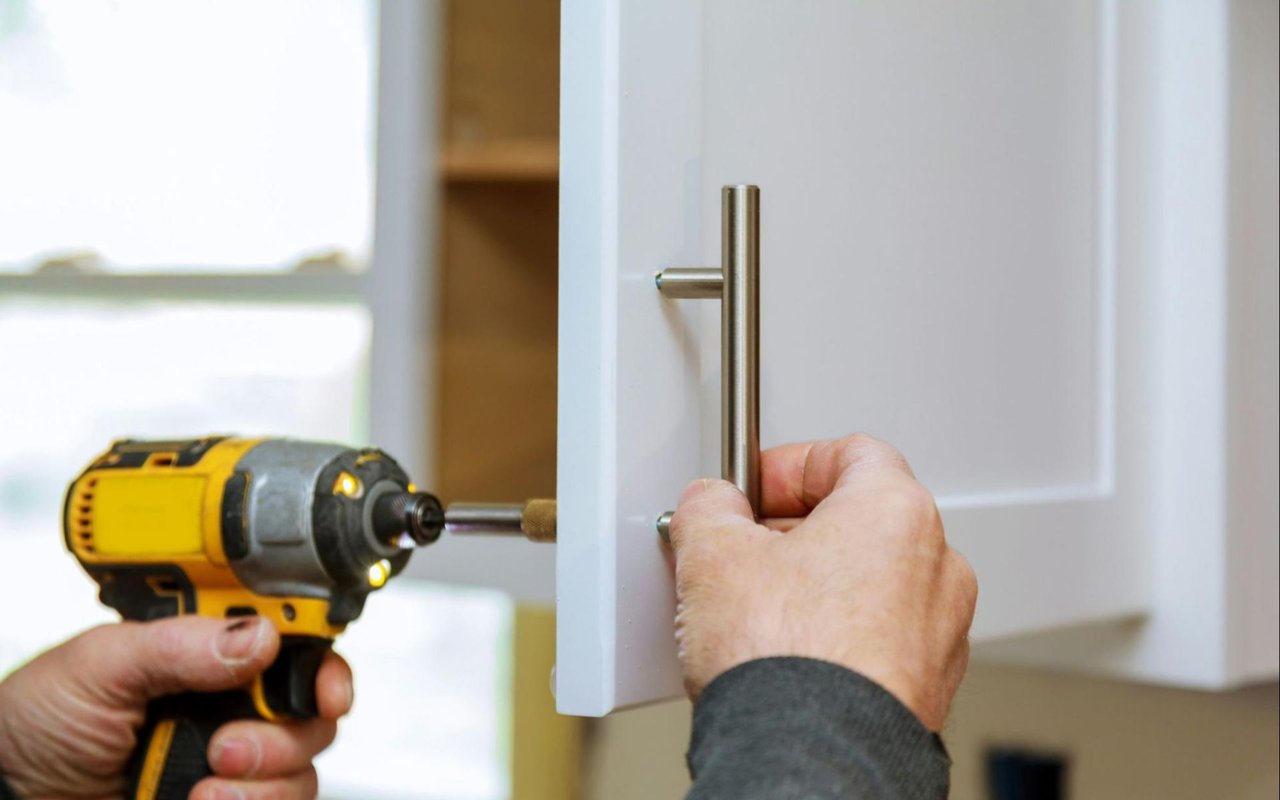
Hardware is one of the most underestimated elements in any room. The pulls on your kitchen cabinets, the knobs on your bathroom vanity, and the hinges on interior doors — these small metal details quietly communicate whether a space feels current or dated. The best part is that replacing them typically takes less than an hour and requires nothing more than a screwdriver.
When selecting new hardware, consider the finish first. Matte black, brushed brass, and unlacquered bronze are all compelling choices right now, and they tend to photograph well if you are thinking about listing your home. Stick to one finish throughout the room for a cohesive look. If your existing cabinet doors have two-hole pulls, measure the center-to-center distance before purchasing replacements.
For bathrooms, replacing a dated towel bar and toilet paper holder with a matching set in a new finish can make a powder room feel fully renovated at a fraction of the cost. It is one of those details that guests notice every time.
What To Replace First
- Cabinet pulls and knobs in the kitchen, which see the most daily use.
- Bathroom vanity hardware.
- Door lever handles on interior doors, which are easy to swap and instantly modernize a hallway.
- Light switch and outlet covers in high-traffic rooms, since mismatched or yellowed plates age a space considerably.
- Closet door pulls, which are often overlooked but contribute to how a bedroom feels overall.
Use Paint Strategically, Not Everywhere
Repainting an entire home is an extensive project. Repainting one wall, a ceiling, or a set of interior doors takes an afternoon. Strategic paint placement is one of the most effective DIY refresh tools available to homeowners because color has an outsized effect on how a room feels compared to the amount of effort required to apply it.
An accent wall in a living room or bedroom gives the eye a place to land and adds architectural interest to an otherwise flat space. Deep, saturated colors like navy, forest green, or warm terracotta work particularly well in rooms that receive natural light, since the light shifts the color throughout the day in interesting ways. If you prefer a subtler approach, painting your ceiling in a shade lighter than your walls draws the eye upward and makes low ceilings feel higher.
Interior trim is another high-impact, low-effort painting target. If your baseboards, door frames, and window casings are currently off-white or cream, painting them a crisp, bright white sharpens the entire room. Conversely, if you want a more layered, collected look, repainting the trim to match the wall color in a room creates a cocooning effect that feels intentional and current.
High-Impact Paint Projects for a Weekend
- Painting a fireplace surround in a contrasting color to make it feel like a true focal point.
- Repainting kitchen cabinets in a two-tone scheme, with upper and lower cabinets in different shades.
- Adding a painted arch or geometric shape to a bedroom wall for a graphic, design-forward look.
- Painting a laundry room or bathroom in a bold color to make a utilitarian space feel more considered.
- Refreshing stair risers with paint or a subtle pattern.
Rethink the Furniture Layout
Before spending a single dollar, walk through each room and ask yourself whether the furniture arrangement is actually working for your lifestyle. Most rooms default to furniture pushed against every wall, which creates open floor space in the center but often makes the room feel harder to have a conversation in. Floating furniture away from the walls and grouping it around a central point almost always improves how a room functions.
Start with the living room. Identify the natural focal point — usually a fireplace, large window, or media console — and orient your seating around it. The goal is to create a layout where conversation feels easy and traffic can move through the room without disrupting whoever is seated. If you have a large sectional that dominates the space, consider whether a smaller sofa and two chairs might give you more flexibility and openness.
Principles for a Better Furniture Layout
- Leave at least 18 inches of clearance between a sofa and a coffee table for comfortable use.
- Avoid blocking natural light sources with large furniture pieces wherever possible.
- Place rugs so that at least the front legs of every major seating piece rest on them, which grounds the arrangement.
- Use a console table behind a floating sofa to define the space and add surface area.
- Remove one or two pieces of furniture if a room feels crowded, since editing is often more effective than rearranging.
Add Texture to Rooms That Feel Flat
A room full of solid colors and smooth surfaces can feel clean but cold. Texture is what makes a space feel more inviting. It adds visual depth, absorbs sound, and signals that a room has been considered with care. The simplest way to introduce texture is through soft goods: rugs, throw pillows, curtains, and blankets.
When selecting textiles, think in layers and contrast. If your sofa is a smooth fabric in a solid neutral, add pillows in a chunky knit or a woven pattern. If your floors are hardwood, a large area rug in a low pile or flat weave introduces warmth without visual clutter. Linen curtains hung high and wide — above the window frame and extending past its edges on both sides — make windows feel larger and add softness that heavy drapes or plastic blinds simply cannot replicate.
Plants are another high-impact, low-cost texture source. A large fiddle-leaf fig or a trailing pothos on a high shelf brings organic shape into a room and introduces color without the permanence of paint.
Textures Worth Adding
- A wool or jute area rug under a dining table to warm up hard flooring and define the space.
- Linen or velvet throw pillows on sofas and chairs to add visual interest without redecorating.
- A woven wall hanging or framed textile as an alternative to traditional art.
- A chunky knit throw draped over a chair or the end of a bed for layered warmth.
- A ceramic or stoneware vase, even empty, which adds organic form and handmade quality to any surface.
FAQs
What Are the Easiest DIY Projects for Beginners?
Replacing hardware and rearranging the furniture are the most beginner-friendly options because they require no tools with a steep learning curve. Painting is also beginner-accessible if you take time to prep surfaces, use painter's tape carefully, and apply two thin coats rather than one heavy one.
How Long Do These Projects Typically Take?
Hardware swaps can be tackled in under an hour per room. Painting an accent wall typically takes an afternoon, including drying time. Furniture rearrangement depends on the size of your space but rarely takes more than two to three hours. Most of these projects are realistically achievable in a single weekend.
Can Small Changes Really Make a Difference in How a Space Looks?
They can and often do. Swapping outdated hardware, adding a new rug, or repainting a single wall can fundamentally change how a room reads, even if the bones of the space stay exactly the same.
Small Changes and Lasting Results
The projects covered here are weekend-scale, budget-conscious, and highly effective at transforming how you experience the rooms you live in every day. Whether you are refreshing your Maryville, TN, home because you want to enjoy it more or because you are getting ready to put it on the market, starting with targeted, high-impact changes is the smarter move.
If you are thinking about which updates might be worth making before listing your home for Maryville, I am happy to walk through your space and share an expert’s perspective on where buyers tend to focus their attention. Reach out to me, Realtor® Michael Grider, to get started.